
Anders Kaye
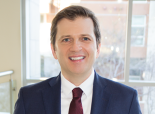 Anders Kaye
Associate Dean for Faculty Development, Professor of Law Director, Criminal Law Fellowship Program Director, Center for Criminal Law and Policy
J.D., University of Chicago Law School, with high honors
A.B., Harvard University, cum laude
After graduating from the University of Chicago Law School, Professor Kaye completed a judicial clerkship with Judge A. Wallace Tashima on the Ninth Circuit Court of Appeals. He then served as an associate appellate counsel for the Criminal Appeals Bureau of The Legal Aid Society of New York, where he represented defendants convicted of crimes ranging from pick-pocketing to murder, and where he served as an alternate vice-president for the Association of Legal Aid Attorneys, a union affiliated with the UAW. He was also a consulting attorney for the Capital Defender’s Office of New York.
Professor Kaye’s current research explores how we come to see some people as “criminals” and how we justify our treatment of such people. He is especially interested in how we think about criminal responsibility, the features a person must have to be responsible for a crime and whether people actually have those features. He is also interested in the criminal excuses, our reasons for excusing and whether those reasons have threatening implications for our current punishment practices. More broadly, his research looks at the ethical significance of social, cultural and environmental causes of criminal behavior for responsibility, excuse and punishment, and at the political aspects of our answers to these questions.
Courses include:
Criminal Law, Criminal Procedure, Vice Crime, Evidence, Federal Criminal Law
Articles, Book Chapters, And Article-Length Works
Radicalized Risk Assessment, 36 Behavioral Sciences & the Law 610 (2018)
Why Pornography is Not Prostitution: Folk Theories of Sexuality in the Law of Vice , 60 St. Louis U. L.J. 243 (2016), available at https://papers.ssrn.com/sol3/papers.cfm?abstract_id=2959972
Excuses in Exile, 48 U. Mich. J.L. Reform 437 (2014), available at https://papers.ssrn.com/sol3/papers.cfm?abstract_id=2959922
Objectifying And Identifying In The Theory Of Excuse, 39 Am. J. Crim. L. 175 (2012), available at https://papers.ssrn.com/sol3/papers.cfm?abstract_id=2959883
Powerful Particulars: The Real Reason The Behavioral Sciences Threaten Criminal Responsibility, 37 Fla. St. L. Rev. 3 (2010), available at https://papers.ssrn.com/sol3/papers.cfm?abstract_id=2959892
Schematic Psychology and Criminal Responsibility, 83 St. John's Law Rev. 565 (2009), available at https://papers.ssrn.com/sol3/papers.cfm?abstract_id=2959882
Does Situationist Psychology Have Radical Implications For Criminal Responsibility?, 59 Ala. L. Rev. 611 (2008), available at https://papers.ssrn.com/sol3/papers.cfm?abstract_id=2959950
The Secret Politics of the Compatibilist Criminal Law, 55 Kan. L. Rev. (2007), available at https://papers.ssrn.com/sol3/papers.cfm?abstract_id=979421
Resurrecting the Causal Theory of the Excuses, 83 Neb L. Rev. 1116 (2005), available at https://papers.ssrn.com/sol3/papers.cfm?abstract_id=598543
Dangerous Places: The Right to Self-Defense in Prison and Prison Conditions Jurisprudence, 63 U. Chi. L. Rev. 693 (1996), available at https://papers.ssrn.com/sol3/papers.cfm?abstract_id=2959970
The Hidden Mechanics of the Neuroscience Threat to Criminal Responsibility, Southern California Criminal Justice Roundtable, University of California, Irvine School of Law, Irvine, CA (August 6, 2018)
Radicalized Risk Assessment, CrimFest 2018, Cardozo School of Law, New York, NY (July 17, 2018)
Radicalized Risk Assessment, ABA Criminal Justice Section Annual Institute, Scholarship Roundtable, Washington, DC (November 2, 2017)
Radicalized Risk Assessment, Faculty Colloquium, Thomas Jefferson School of Law, San Diego, CA (October 30, 2017)
The Hidden Mechanics of the Neuroscience Threat to Criminal Responsibility , AALS Midyear Conference, Criminal Justice Section, Works-In-Progress Panel / Crimfest 2017, Washington College of Law, Washington, DC. (June 11, 2017)
The Hidden Mechanics of the Neuroscience Threat to Criminal Responsibility , Law and the Biosciences Conference, Stanford Law School, Palo Alto, CA (April 21, 2017)
The Hidden Mechanics of the Neuroscience Threat to Criminal Responsibility, Faculty Colloquium, Thomas Jefferson School of Law, San Diego, CA (April 17, 2017)
Don’t Blame Me: Problems In The Political Theory of Blame, ABA Criminal Justice Section Annual Institute, Scholarship Roundtable, Washington, DC. (November 3, 2016)
Don’t Blame Me: Problems In The Political Theory of Blame, CrimFest 2016, Cardozo School of Law, New York, NY (July 11, 2016)
Invited Commentary on Peter Alces' Neuroscience and Criminal Law, Buffalo Criminal Law Center Colloquium, SUNY Buffalo Law School [by teleconference], Buffalo, NY (April 1, 2016)
Invited Commentary on Steven Morse's Law and the Sciences of the Brain / Mind, Buffalo Criminal Law Center Colloquium, SUNY Buffalo Law School by [teleconference], San Diego, CA teleconference (April 1, 2016)
Corrupting Touch and Fallen Avatars: Unearthing Folk Theories of Sexuality Where the Laws of Prostitution and Pornographic Acting Intersect, CrimFest 2014, Rutgers School of Law - Newark, Newark, NJ (July 22, 2014)
Excuses in Exile, ABA Criminal Justice Section Annual Institute, Scholarship Roundtable, Washington, DC (October 31, 2013)
Commentary on Joseph Kennedy’s Social Desert, AALS Midyear Conference, Criminal Justice Section, Works-In-Progress Panel, San Diego, CA (June 12, 2013)
Commentary on Joseph Kennedy’s Social Desert, AALS Midyear Conference, Criminal Justice Section, Works-In-Progress Panel, San Diego, CA (June 12, 2013)
Mitigation as the Unconscious of the Criminal Law, AALS Midyear Conference, Criminal Justice Section, Works-In-Progress Panel, San Diego, CA (June 12, 2013)
Zimmerman / Martin, Stand Your Ground Panel, Thomas Jefferson School of Law, San Diego, CA (April 4, 2012)
Does Situationist Psychology Have Radical Implications For Criminal Responsibility? Texas Junior Scholarship Workshop, Texas Wesleyan School of Law, August 2007
The Secret Politics of the Compatibilist Criminal Law, Faculty Colloquium, Thomas Jefferson School of Law, San Diego, CA (April 22, 2006)
The Secret Politics of the Compatibilist Criminal Law, Faculty Colloquium, Thomas Jefferson School of Law, San Diego, CA (April 12, 2006)
The Secret Politics of the Compatibilist Criminal Law, University of Chicago Scholarship Workshop Class, Nov. 2006
The Thomas Jefferson School of Law faculty is highly prolific in the field of legal scholarship and our professors are in demand as speakers and panelists at legal events in the U.S. and abroad.